Jan Svankmajer
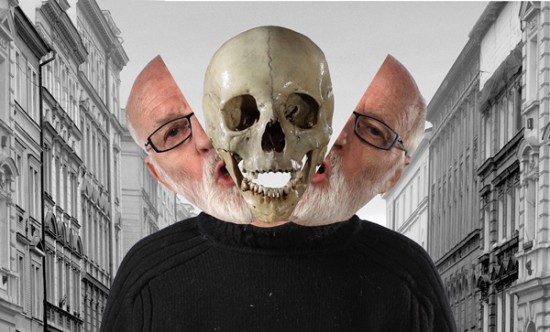
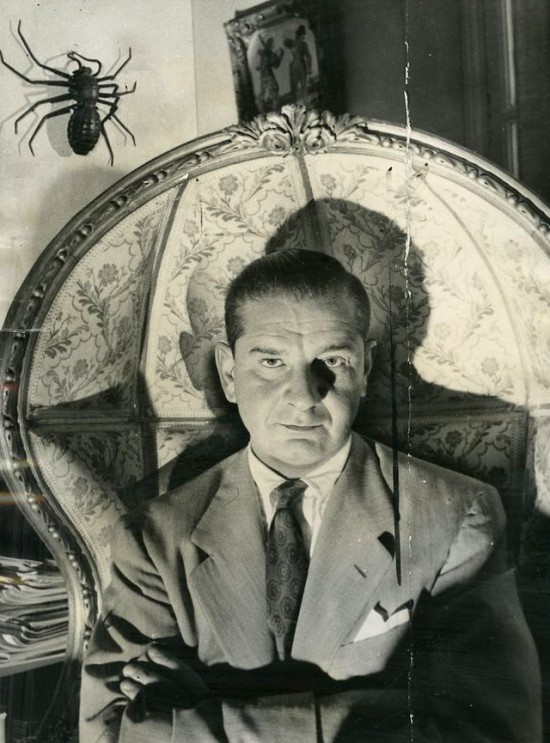
Jan Švankmajer is a Czech filmmaker and artist whose work spans several media. He is a self-labeled surrealist known for his surreal animations and features, which have greatly influenced other artists such as Terry Gilliam, the Brothers Quay, and many others.

Charles Samuel Addams 100th Birthday
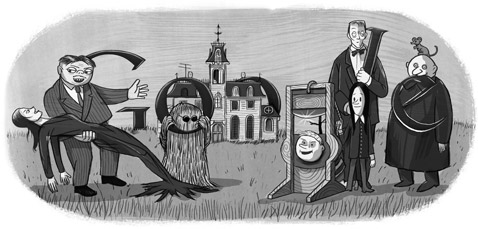
Today Google is celebrating Charles Samuel Addams‘ 100th birthday with a funny Doodle. Maybe you don’t know him, but you surely know his work. Yes, he’s the creator of the amazing Addams Family.
Who Killed Bambi just can’t help but add another celebration post to the thousands that are popping up through the web. Thanks Charles!


Edward Gorey
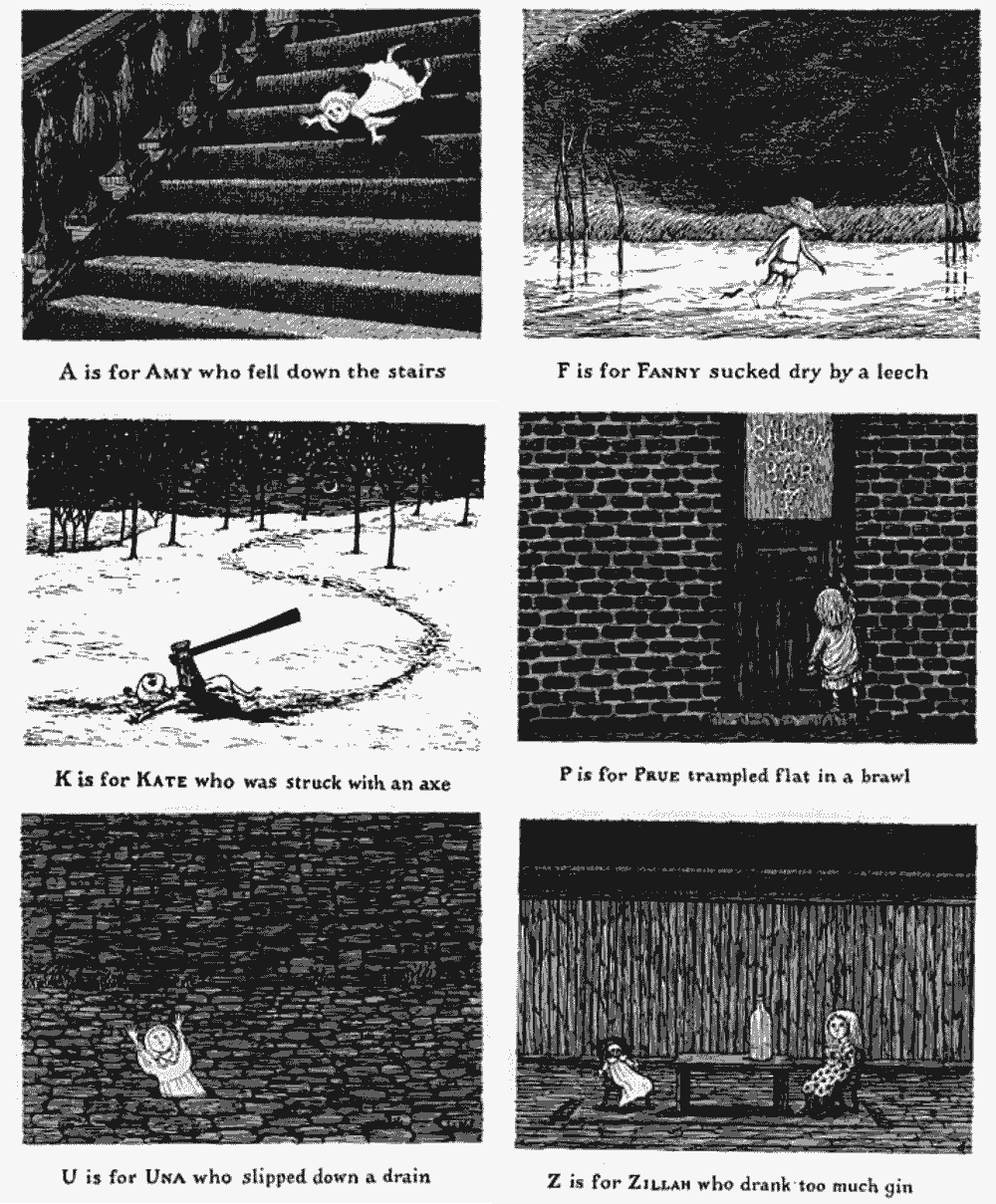
Quoted from Wikipedia: “The Gashlycrumb Tinies is an abecedarian book written by Edward Gorey that was first published in 1963. Gorey tells the tale of 26 children (each representing a letter of the alphabet) and their untimely deaths in rhyming dactylic couplets, accompanied by the author’s distinctive black and white illustrations.”
Here‘s a beautiful animated gif.

You talkin’ to me?
“Steve Schapiro was the special photographer on the set of Taxi Driver, capturing the film’s iconic moments and actors behind the scenes. This book features hundreds of images selected from Schapiro’s archives, offering fans a trip back in time to witness the making of Scorsese’s masterpiece.”
Edited by TASCHEN Books.
(via laughing squid)

After Arcimboldo
Winter (After Arcimboldo) (2010) is a colossal 15-foot-tall, fiberglass sculpture by American artist and filmmaker Philip Haas. It is inspired by Arcimboldo’s painting Winter (1563), which is on loan to the exhibition “Arcimboldo, 1526-1593: Nature and Fantasy” on view at the National Gallery of Art, Washington, from September 19, 2010 through January 9, 2011.

A Comparative View of the Human and Animal Frame
A Comparative View of the Human and Animal Frame by Benjamin Waterhouse Hawkins was published in 1860. Hawkins’ intent was “to give a comparative view of the variation in form of the bony skeleton or framework of those animals most frequently required by the artist, designer, or ornamentist.”
[via designyoutrust]


Blood and Laughter: Caricatures From the 1905 Revolution
Images from David King and Cathy Porter‘s “Blood and Laughter: Caricatures From the 1905 Revolution”.
[via ephemera assemblyman]

Alfred Rethel, Death as a cutthroat

This work was engraved by Alfred Rethel in 1851. Not only the plague provided an opportunity for the creation of new representation of Death. At the 19th century, another illness infected Europe in waves: the cholera. Rethel drew Death as a cutthroat, and engraved it later, since woodcut was a very popular genre at this time. He was inspired by by an account that the celebrated poet Heinrich Heine had made of the sudden outbreak of cholera in the year 1832, at a masquerade during the carnival of Paris. Here, Death plays a kind of violin, while the musicians flee. Close to them,stands a emaciated female silhouette, wrapped in a shroud: symbol of the disease. In the foreground, some people have already died of the cholera.
[source: La mort dans l'art]
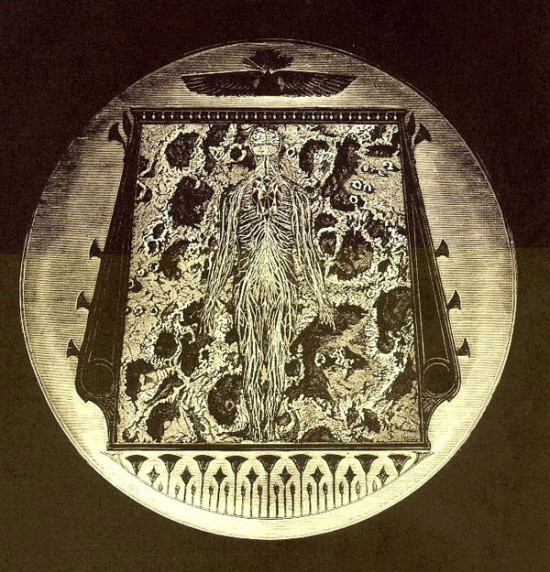
Dream Anatomy
Anatomical imagery proliferated, detailed and informative but also whimsical, surreal, beautiful, and grotesque — a dream anatomy that reveals as much about the outer world as it does the inner self.
Continue Reading 6 Comments 6 responses